
Biofouling Control at CTPALM Power Plant
Modernizing Biofouling Control for One of Mexico’s Largest Coastal Power Plants
Facility Profile
The President Adolfo López Mateos Thermoelectric Power Plant (CTPALM) is a 2,100 MW combined‑cycle facility operated by Comisión Federal de Electricidad (CFE) and remains one of Mexico’s largest and most strategically important power plants. Located in Tuxpan, Veracruz—a major industrial and maritime hub on the Gulf of Mexico—the plant’s six generating units rely on natural gas as the primary fuel source, with petroleum as backup.
To support condenser cooling, CTPALM draws more than 90 m³/s of seawater through its intake system. Continuous hypochlorite dosing is required to prevent biofouling in piping, heat‑exchange surfaces, and other seawater‑exposed equipment. To modernize this process and improve reliability, CFE partnered with Creston Water Solutions to implement on‑site seawater electrochlorination.
The Challenge
CTPALM needed a disinfection solution that could operate reliably under demanding coastal conditions and integrate seamlessly with the plant’s high‑volume cooling water system. Key challenges included:
- Maintaining consistent hypochlorite production despite variable seawater quality
- Reducing operational complexity and minimizing manual chemical handling
- Ensuring safe management of hydrogen generated during electrolysis
- Delivering continuous, stable dosing to protect critical cooling infrastructure
- Implementing a system capable of long‑term, low‑maintenance performance in a harsh marine environment
- CFE required a technology partner that could provide robust engineering support, precise installation and commissioning, and a system proven to perform in large‑scale power applications.
The Result
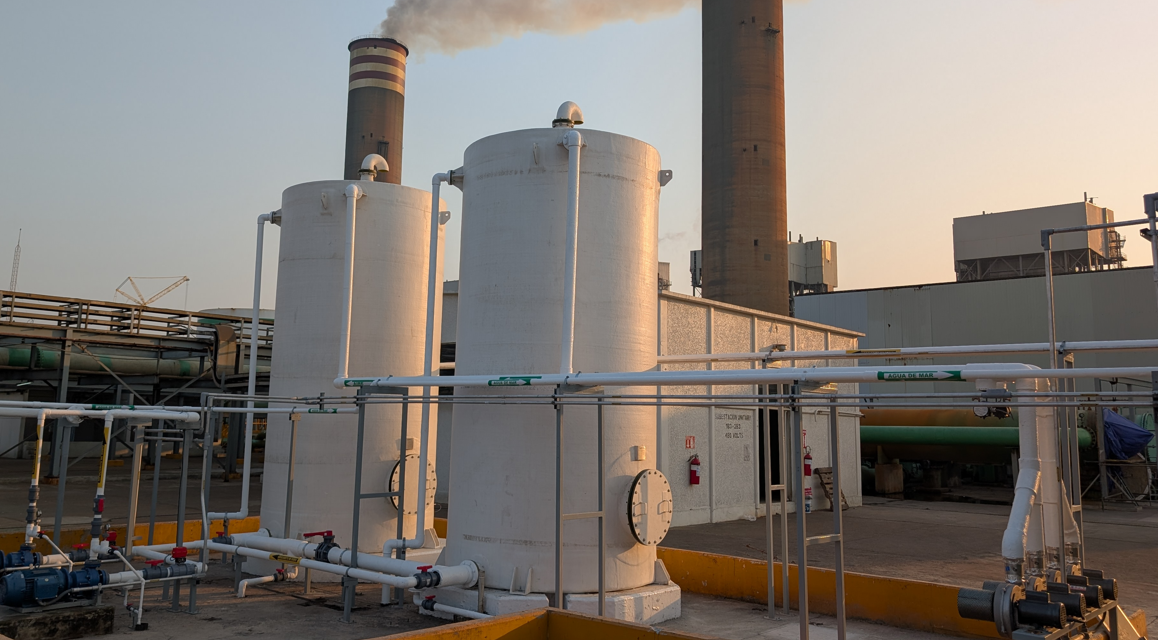
Creston Water Solutions installed, commissioned, and started up two Electrichlor® seawater electrochlorination systems, each producing 12 kg/h of equivalent chlorine. The systems continuously generate a 2,000 mg/L sodium hypochlorite solution directly from seawater drawn from the plant’s main headers.
The solution is produced through controlled electrolysis in high‑efficiency electrolyzer cells, with hydrogen safely diluted below its LEL and vented from dedicated storage tanks. From there, centrifugal pumps deliver the hypochlorite solution to the plant’s seawater intake points for continuous biofouling control.
The installation delivered:
- Reliable, uninterrupted hypochlorite production aligned with CTPALM’s cooling water demand
- Improved safety, eliminating bulk chemical deliveries and reducing operator exposure
- Operational simplicity, with automated flow control and stable system performance
- Enhanced protection of condensers, piping, and seawater‑exposed assets
- A scalable, long‑life solution engineered for coastal power environments
CFE now benefits from a modern, resilient disinfection system that supports plant uptime, reduces maintenance burden, and strengthens long‑term asset performance.
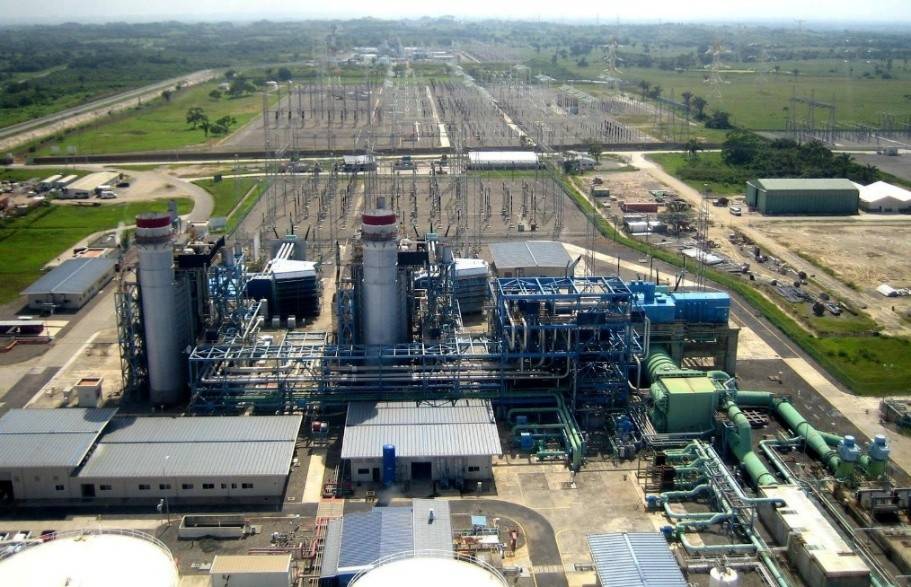
Aerial view of CTPALM Combined Cycle Power Plant in Tuxpan, Mexico.
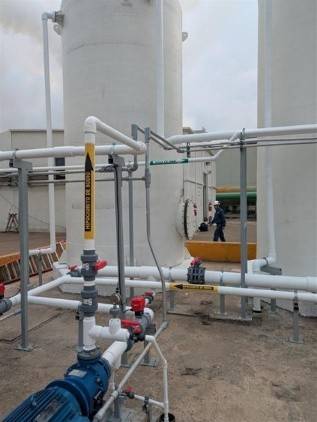
The hypochlorite generation facility was installed next to the seawater intake channel.
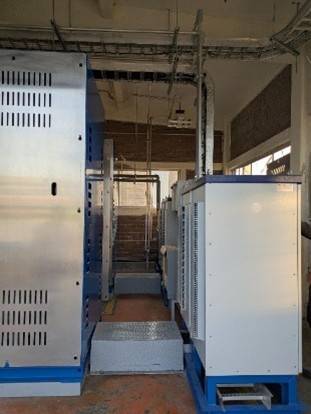
Each 12 kg/h Electrichlor system included tank, generator cabinet and transformer rectifier.
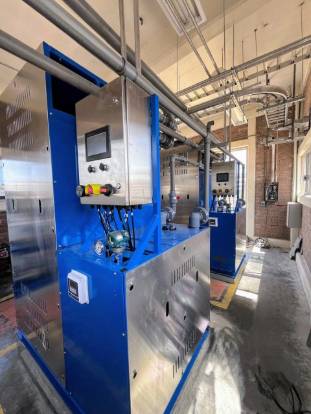
Each generator cabinet included three – 4 kg/h Electrichlor cells.